
As an alternative to the direct write-off technique, you might make a provision for bad debts direct write off method based on an estimation of future bad debts in the same period that you recognise revenue. This system aligns income and expenses, making it the more palatable accounting technique. Sometimes it’s used for tax purposes when actual bad debts are easier to track than estimates. The direct write-off method is often used when tracking bad debts doesn’t need to be precise—just practical.
- These tactics empower companies to safeguard assets and foster stronger customer relationships.
- Among these, the direct write-off method stands out as a straightforward way to manage and record bad debts when they become irrecoverable.
- By using the allowance method, companies align their financial statements more closely with the economic realities of credit sales, thereby improving the reliability and usefulness of their financial data.
- With this information, you can better prepare your business and sail through the challenge easily.
- Thus, the company cannot enter credits in either the Accounts Receivable control account or the customers’ accounts receivable subsidiary ledger accounts.
Customer Stories
You record the transaction as a $5,000 credit to your Revenue and $5,000 debit to Accounts Receivables. If you received a downpayment of 50%, you would credit this amount from Accounts Receivables as well. In this article, we are going to talk about the advantages and disadvantages of the direct write-off method in the areas of accounting treatment as well as process management. With JK Accounting, you eliminate the need to hire, train, and manage a full-time accountant, freeing up valuable time and resources for your business.
Few Credit Clients
- The goal is to accurately reflect the value of the company’s assets and avoid misstating its net income, gross margins, or retained earnings.
- Sometimes it’s used for tax purposes when actual bad debts are easier to track than estimates.
- While the direct write-off method is favored for its simplicity, it is not the only approach to dealing with uncollectible debts.
- This is done at the end of an accounting period to match anticipated bad debts with the related revenues.
This method uses past data to predict the uncollectible amounts of the current accounting periods. However, from an accounting perspective, these uncollectible receivables are not allowed to be continuing records as current assets in the entity’s financial statements. This is why GAAP doesn’t allow the direct write-off method for financial reporting. But, https://loverfashion.com/what-is-financial-risk-how-to-identify-control-it-2/ under the direct write-off method, the loss may be recorded in a different accounting period than when the original invoice was posted. Suppose a business identifies an amount of 200 due from a customer as irrecoverable as the customer is no longer trading. If the amount is not collectible, it needs to be removed from the customers accounts receivable account, and this is achieved with the following direct write-off method journal entry.
Define Bad Debt and Provide Real-World Examples
Under the Direct Write-Off method, if $50,000 is deemed uncollectible, the company would record this as an expense in the year it determines the debt cannot be collected. This could potentially be long after the revenue was earned, leading to a mismatch. On the other hand, using the Allowance Method, the company might estimate that 5% of its credit sales will be uncollectible based on past experience and current economic conditions. To illustrate, consider a company that sells $10,000 worth of goods on credit. If the customer defaults on the payment in a subsequent period, and the company uses the direct write-off method, it will record a bad debt expense of $10,000 at that later date.

Allowance for Doubtful Accounts is where we store the nameless, faceless uncollectible amount. We know some accounts will go bad, but we do not have a name or face to attach to them. Once an uncollectible account has a name, we can reduce the nameless amount and decrease Accounts Receivable for the specific customer who is not going to pay. One customer purchased a bracelet for $100 a year ago and Beth still hasn’t been able to collect the payment.
Another attribute of the allowance method is that it allows businesses to report bad debts in a more timely manner. Since the estimation of uncollectible accounts is done periodically, businesses can adjust the allowance based on changes in the economic environment or specific customer circumstances. This flexibility ensures that the financial statements reflect the most up-to-date information.

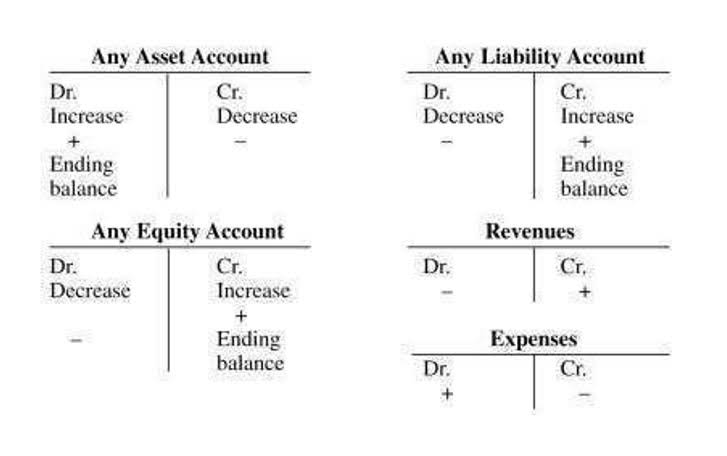
- The entry for the allowance method involves debiting Bad Debts Expense and crediting a contra-asset account called Allowance for Doubtful Accounts.
- The way these debts are handled on financial statements can significantly impact a company’s fiscal health and tax liabilities.
- Since 2014, she has helped over one million students succeed in their accounting classes.
- From an accountant’s perspective, the direct write-off method is not the preferred approach due to its potential to distort financial statements.
- With 7 AI patents, 20+ use cases, FreedaGPT, and LiveCube, it simplifies complex analysis through intuitive prompts.
It is an invoice that is uncollectible since the customer is bookkeeping unable to pay or not willing to pay back the amount for some reason and all attempts of recovery have been made by the company. The direct write off method may be necessary to maintain the accuracy of the written off amount. However, it creates inaccuracies in the revenue and bad debt amounts that are reflected in the financial reports. The generally accepted accounting principles or GAAP require that all revenue costs must be expensed in the same accounting period.